

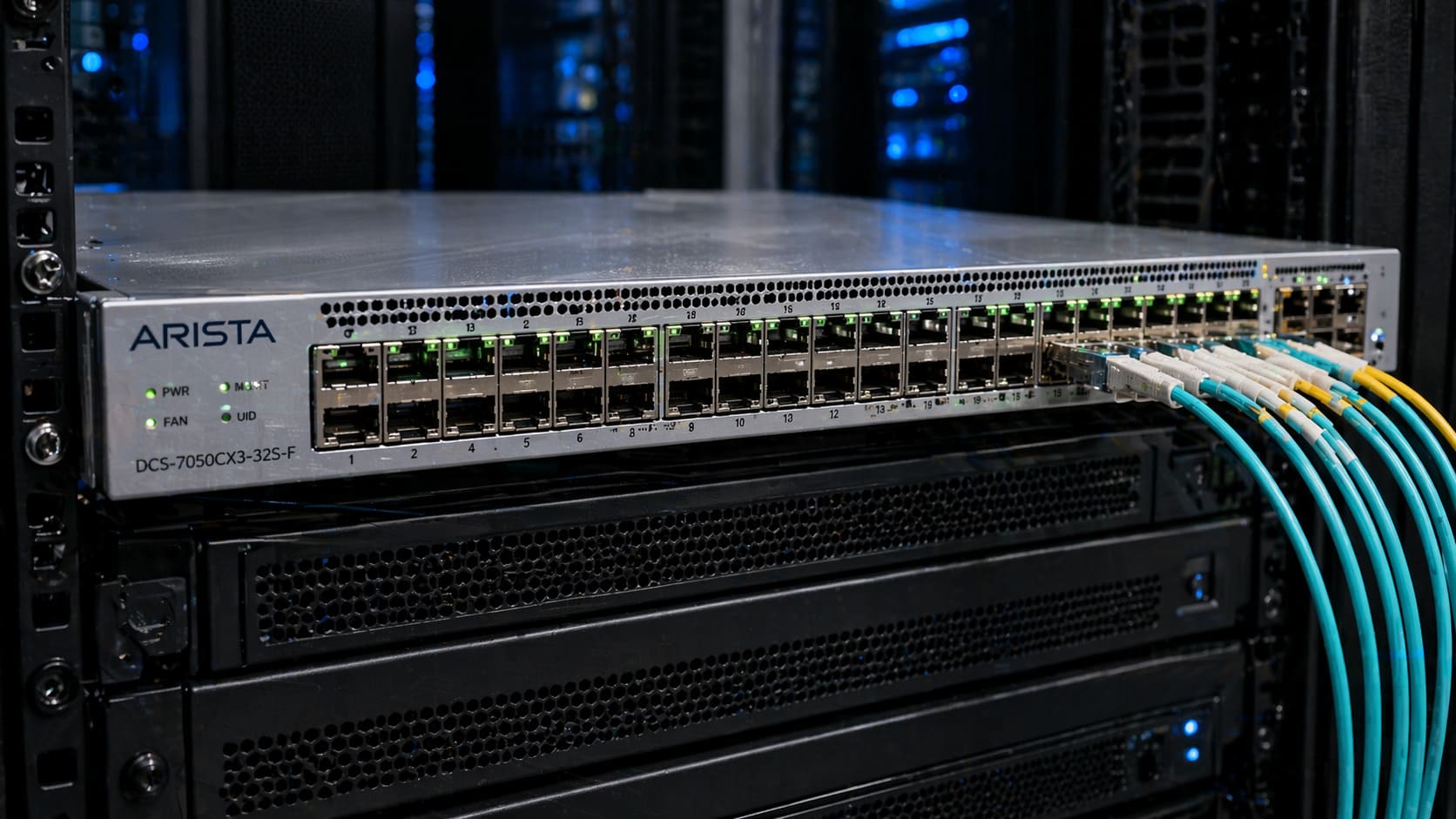
The Arista DCS-7050CX3-32S-F is built for organizations that need fast, reliable 100G switching without moving to a large modular platform. It combines high port density, low latency, and flexible breakout support in a compact 1RU design. That makes it a practical option for modern data centers handling cloud workloads, storage traffic, and growing east-west traffic between servers.
It also stands out because it balances performance with operational flexibility. With 32 x 100G QSFP ports, support for multiple speed modes, and Arista EOS software, this switch fits a wide range of deployment needs. For teams planning leaf-spine fabrics, upgrading from 40G, or supporting AI and data-heavy environments, the DCS-7050CX3-32S-F remains a serious platform to evaluate in 2026.
What Is the Arista DCS-7050CX3-32S-F?
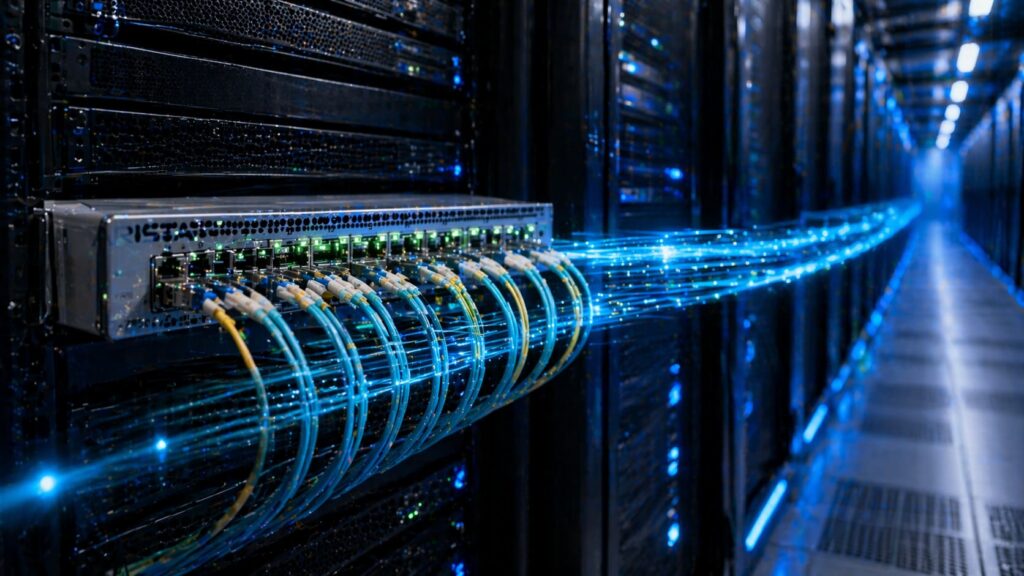
The DCS-7050CX3-32S-F is a fixed-configuration Arista data center switch in the 7050X3 family. It is built for non-blocking 100G switching in modern Ethernet fabrics, with flexible port speeds that make it easier to support mixed environments during migrations.
Arista positions the 7050CX3-32S and 7050CX3-32C as 1RU systems with 32 QSFP100 ports and a choice of 100GbE, 40GbE, 4x10GbE, 4x25GbE, or 2x50GbE modes on each QSFP port.
7050X3 Series Positioning
The 7050X3 series focuses on:
- High-density 100G switching
- Low latency performance
- Strong automation support through EOS
This model sits in the middle of the lineup, balancing cost and capability.
1RU Form Factor and Front-to-Rear Airflow
Key hardware traits include:
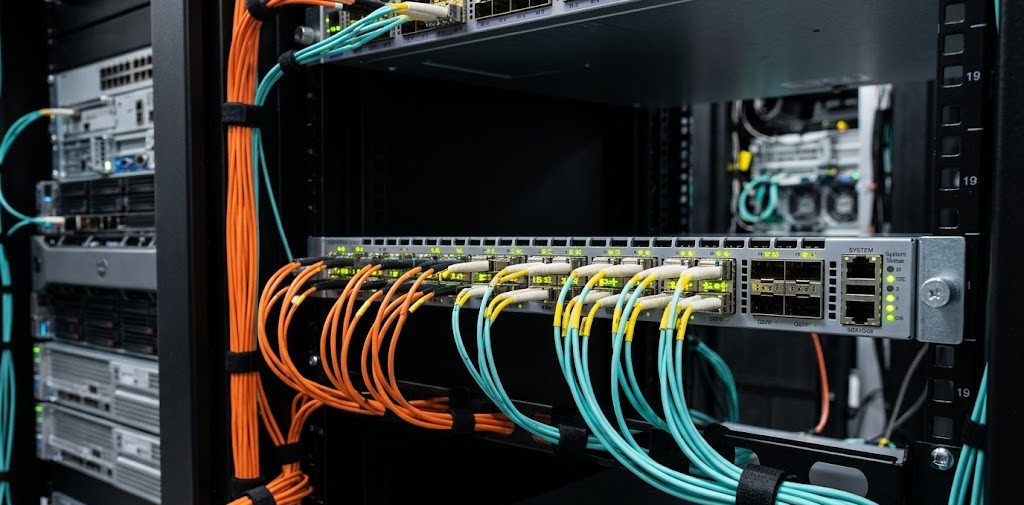
- Compact 1RU footprint
- Front-to-rear airflow (-F model)
- Efficient cooling for traditional rack layouts
Airflow alignment is important for proper data center cooling.
Who This 100G Switch Is Built For
This switch is built for data center operators, cloud environments, enterprise core-aggregation layers, and performance-focused storage or compute networks.
It also fits teams upgrading from 40G to 100G while still needing breakout support for 25G, 10G, and 50G endpoints. In that sense, it aligns well with broader AI network planning and staged data center refresh cycles.
Arista DCS-7050CX3-32S-F Specifications at a Glance
This switch focuses on performance, flexibility, and reliability.
Port Configuration
- 32 × 100G QSFP ports
- 2 × 10G SFP+ ports
- Multiple breakout options
100G Throughput and Forwarding Performance
- 6.4 Tbps switching capacity
- ~2 billion packets per second
- Wire-speed Layer 2/Layer 3 forwarding
Latency, Buffer, and Switching Architecture
- ~800ns latency
- 32MB shared packet buffer
- Cut-through switching
Power, Cooling, and Redundancy
- Dual AC power supplies
- Hot-swappable fans
- Front-to-rear airflow
| Specification | Arista DCS-7050CX3-32S-F |
| Form factor | 1RU fixed switch |
| Main ports | 32 x 100G QSFP100 |
| Additional ports | 2 x 1/10G SFP+ |
| Port modes | 100G, 40G, 4x10G, 4x25G, 2x50G |
| Switching capacity | 6.4 Tbps |
| Forwarding rate | ~2 Bpps |
| Latency | Starting around 800ns |
| Packet buffer | 32MB shared |
| Airflow | Front-to-rear |
| Power | Dual AC, redundant |
| Software | Arista EOS, CloudVision capable |
100G Performance Explained
For many buyers, the real value of this switch is not just raw 100G speed. It is the balance of density, breakout options, and predictable forwarding in a compact footprint. That is especially useful in environments where east-west traffic dominates.
32 x 100GbE Density for Leaf and Spine Roles
Thirty-two native 100G ports in 1RU is enough to support several common roles. As a leaf, the switch can connect multiple high-performance servers or storage nodes with breakout.
As a spine or collapsed spine, it provides dense uplink capacity for smaller or mid-sized fabrics. Arista’s own description highlights both leaf and spine deployment flexibility.
6.4 Tbps Switching Capacity in Real Deployments
A 6.4 Tbps switching budget gives the switch room to handle heavy rack-to-rack traffic, storage replication, and clustered compute flows without oversubscription pressure inside the box itself.
That does not remove the need for fabric design discipline, but it does mean the hardware is not the first limiting factor in many 100G builds.
Breakout Flexibility: 100G, 40G, 25G, 10G, and 50G
Breakout support is one of the strongest reasons to keep this platform on a shortlist. It lets teams attach newer 100G links and older lower-speed endpoints from the same switch. That reduces disruption during refresh cycles and makes cabling plans more forgiving. A broader cost control approach often starts with exactly this kind of mixed-speed flexibility.
Why This Matters for East-West Traffic
East-west traffic grows when applications spread across clusters, storage pools, and distributed compute. Low oversubscription, low latency, and dense 100G links are all helpful in that pattern. Dell’Oro reported that Ethernet accounted for more than two-thirds of AI back-end data center switch sales in 3Q 2025, which reinforces the point that Ethernet fabrics remain central in high-performance AI infrastructure.
| Port mode | Per-port behavior | Maximum logical scale |
| 100G | Native QSFP100 | 32 x 100G |
| 40G | Native QSFP mode | 32 x 40G |
| 4 x 25G breakout | Split per QSFP | Up to 128 x 25G |
| 4 x 10G breakout | Split per QSFP | Up to 128 x 10G |
| 2 x 50G breakout | Split per QSFP | Up to 64 x 50G |
| SFP+ ports | 1/10G alternative connectivity | 2 x SFP+ |
Low Latency and AI Workload Relevance
This is where the 7050CX3-32S-F still feels modern. It is not an 800G platform, but its latency and forwarding profile remain well aligned with many performance-sensitive Ethernet workloads.
800ns Cut-Through Switching
Arista states latency starts from about 800ns with cut-through switching. That is low enough to matter in fabrics where many small delays add up across distributed jobs.
Why Low Latency Matters for AI Clusters and HPC
AI clusters, inference farms, and HPC-style environments often depend on fast message exchange between nodes. Lower latency can improve synchronization efficiency, reduce wait time between distributed processes, and help storage traffic feel more responsive.
It is not the only metric that matters, but it is a meaningful one when workloads are tightly coupled.
Burst Handling with Shared Packet Buffer
The 32MB shared packet buffer helps the switch absorb short bursts rather than forcing immediate drops. That is useful for uneven traffic patterns, microbursts, and storage bursts where traffic can spike quickly. For teams working on network cost efficiency, buffering plus predictable forwarding can reduce the need for overbuilding every layer.
Suitability for Training, Inference, and Storage Fabrics
The switch is a better fit for modest to strong AI Ethernet fabrics than for the newest ultra-large back-end clusters built around faster generations. It is also well suited to storage fabrics and east-west heavy compute zones where 100G remains the practical target. In many enterprise settings, that is still the sweet spot.
| Workload type | Fit level | Why it fits |
| AI training clusters | Good | Low latency and dense 100G links help distributed node traffic |
| AI inference pods | Very good | Predictable response times and high port density suit scale-out inference |
| HPC-style Ethernet fabrics | Good | Cut-through switching and shared buffer support performance-sensitive flows |
| Storage fabrics | Very good | High throughput and burst tolerance help replication and shared storage traffic |
| General cloud compute | Very good | Flexible breakout and wire-speed forwarding suit mixed server environments |
Software, Automation, and Network Operations
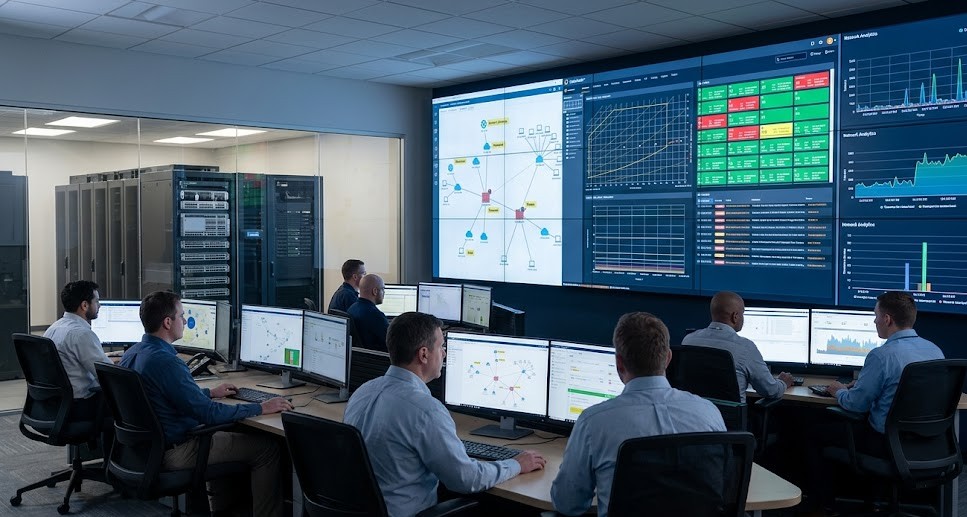
Hardware is only half the story. The value of this switch rises when it is used with EOS and the broader Arista operating model. Arista describes EOS as a modular, Linux-based network operating system and CloudVision as a multi-domain management platform for simplified NetOps.
Arista EOS Overview
EOS is one of the strongest arguments for buying an Arista platform, even an older one. It offers a consistent software model across the portfolio, supports automation, and keeps operations familiar across multiple Arista switches.
CloudVision Integration
CloudVision adds centralized management, visibility, and zero-touch style operational workflows. For teams that want fewer manual steps and cleaner lifecycle management, that can be a major operational advantage.
VXLAN, EVPN-VXLAN, and Segment Routing Support
The switch supports:
- VXLAN overlays
- EVPN-based fabrics
- Modern network design
Telemetry, Visibility, and Automation Benefits
State streaming, centralized policy, and better visibility help operations teams spend less time chasing problems. In dense fabrics, that is often as important as raw switching performance. This matters even more when the switch is used in cloud or storage-focused environments.
Deployment Use Cases
Leaf Switch in Spine-Leaf Architectures
The switch works well as a 100G leaf for racks with high uplink density or breakout-based server attachment. That is one of its most natural roles.
Spine or Aggregation Role in 100G Fabrics
In smaller or mid-sized 100G designs, it can also serve as a spine or aggregation switch. Its 32 x 100G density gives enough room for many compact fabrics without moving to a modular chassis.
AI, Cloud, and Big Data Environments
This platform remains a strong fit for cloud compute, AI pods built around 100G Ethernet, and data-heavy east-west workloads. It is especially attractive when low latency matters but 400G or 800G is not yet required.
Migration from 40G to 100G Networks
Because each QSFP port can support multiple speed modes, the switch makes gradual migration easier. Teams can keep part of the fabric at lower speeds while moving core links to 100G.
Strengths of the Arista DCS-7050CX3-32S-F
High Port Density in 1RU
- Saves rack space
- Reduces hardware footprint
Strong 100G Flexibility
- Multiple port speeds
- Easy scaling
Low-Latency Design
- ~800ns latency
- Fast data movement
Redundant and Hot-Swappable Hardware
- High uptime
- Easy maintenance
Limitations and Buying Considerations
Where Newer Platforms May Offer More Headroom
If your roadmap points toward 400G, 800G, or very large AI back-end clusters, newer platforms will offer more long-term growth.
Airflow Selection: -F vs -R
Do not treat airflow as a small detail. The -F version is front-to-rear, while -R is rear-to-front. Match the switch to the rack’s cooling pattern.
Optics, Cabling, and Breakout Planning
The platform supports a broad range of optics and cables, but real deployment success depends on choosing the right transceivers, breakout assemblies, and lane planning from the start.
End-of-Sale Considerations
Arista announced end of sale for the 7050CX3-32S family in September 2025, with March 20, 2026 as the last day to order and software bug-fix support listed through March 20, 2029.
That does not make the switch unusable in 2026, but it should affect lifecycle planning.
Arista DCS-7050CX3-32S-F vs Similar / Nearest Product
The closest same-family comparison is the Arista DCS-7050CX3-32C. On the current Arista datasheet, both models are presented with the same headline hardware profile: 32 x 100G QSFP100 ports, 2 x SFP+ ports, 1RU form factor, and up to 6.4 Tbps throughput.
Arista DCS-7050CX3-32S-F vs Arista DCS-7050CX3-32C
For many buyers, this is less a performance decision and more a procurement and fit decision. Based on the currently published Arista material available here, the two models are extremely close on core specifications.
Port and Cabling Differences
Arista’s current 7050X3 datasheet does not show a clear performance split between 32S and 32C on the headline port counts or throughput. Because of that, buyers should confirm SKU-specific optics, BOM expectations, and seller inventory details before treating them as different in day-to-day fabric design.
Deployment Fit Differences
If you already know you need the exact 32S-F airflow and part number for a rack standard or support plan, that usually decides the choice faster than abstract spec comparison.
Which One Makes More Sense for 100G Data Center Builds
For most 100G data center builds, choose the model you can source cleanly with the right airflow, support path, and optics plan. In real deployments, those details matter more than a near-identical spec sheet.
| Category | DCS-7050CX3-32S-F | DCS-7050CX3-32C |
| Form factor | 1RU | 1RU |
| Main ports | 32 x 100G QSFP100 | 32 x 100G QSFP100 |
| Additional ports | 2 x SFP+ | 2 x SFP+ |
| Throughput | Up to 6.4 Tbps | Up to 6.4 Tbps |
| Breakout modes | 100G, 40G, 4x10G, 4x25G, 2x50G | Same headline support on current datasheet |
| Airflow option shown | -F = front-to-rear | Available in -F and -R SKUs |
| Practical difference | Specific 32S-F SKU targeting airflow and sourcing needs | Nearest same-family alternative with near-identical published core specs |
Competitor Perspective
The 7050CX3-32S-F sits in the class of fixed 100G data center switches that appeal to buyers who want density and low latency without stepping into a modular chassis or next-generation premium pricing.
How It Compares with Other 100G Fixed Data Center Switches
Compared with similar 100G fixed switches, the Arista platform stands out more for software consistency and operational model than for a unique raw-speed advantage.
Performance vs Flexibility
Its strongest argument is balance. Some competing platforms may match port count, but not all combine low latency, broad breakout support, and EOS-based operations this cleanly.
Latency vs Operational Simplicity
There are faster and newer options, but many buyers will accept that trade if operations stay simpler and acquisition cost stays lower.
Best-Fit Buyer Profile
This is a strong fit for buyers who want proven 100G Ethernet, Arista software consistency, and a practical upgrade path rather than headline-chasing speeds.
| Buyer priority | How 7050CX3-32S-F stacks up |
| Dense 100G in small space | Strong |
| Low latency | Strong |
| Broad breakout options | Strong |
| Long future runway beyond 100G | Moderate |
| Simplicity of operations | Strong with EOS/CloudVision |
| Best fit | Enterprise DC, cloud pods, storage, moderate AI Ethernet fabrics |
Is the Arista DCS-7050CX3-32S-F Still a Good Choice in 2026?
Where It Still Delivers Strong Value
Yes, for the right buyer. It still delivers strong value where 100G is the target speed, rack space matters, and operations teams already know Arista EOS.
When to Consider Newer Arista Alternatives
Consider newer options when your design requires more headroom, longer lifecycle comfort, or faster-than-100G uplinks as a baseline.
Recommended Buyer Scenarios
The best 2026 buyers are those building or expanding 100G Ethernet fabrics, refreshing older 40G environments, or sourcing proven platforms through supported secondary channels. A current available unit can make sense when the performance target is clear and the lifecycle tradeoff is acceptable.
Final Verdict
Who Should Buy It
Buy it if you need dense 100G in 1RU, low latency, strong breakout flexibility, and Arista operational consistency.
Who Should Skip It
Skip it if your roadmap already demands 400G or 800G, or if you need the longest possible primary lifecycle runway.
Bottom-Line Assessment
The Arista DCS-7050CX3-32S-F remains a capable and credible 100G data center switch. Its value is not that it is the newest. Its value is that it still does the core job very well: fast switching, flexible port use, and dependable integration into modern Ethernet operations. For many 2026 deployments, that is enough.
Need a Low-Latency 100G Arista Switching Solution?
Catalyst Data Solutions Inc can help you source and deploy the Arista DCS-7050CX3-32S-F for high-performance data center, cloud, and AI network environments.
FAQs
Is the Arista DCS-7050CX3-32S-F a Leaf or Spine Switch?
It can be either. Arista positions the platform for flexible leaf or spine deployment, depending on the fabric size and port design.
Does it support breakout from 100G to 25G or 10G?
Yes. Each QSFP port supports 4x25G and 4x10G breakout, along with 40G, 50G, and native 100G modes.
Is 800ns latency good for AI workloads?
Yes, for many 100G Ethernet AI and inference environments it is a strong result. It is especially useful where distributed traffic and node-to-node responsiveness matter.
What does the “-F” airflow mean?
It means front-to-rear airflow. That airflow direction should match the cooling design of the rack.
Is the switch suitable for 40G to 100G migration?
Yes. Its support for 40G, 100G, and lower-speed breakout modes makes staged migration practical.
Does it support EOS, CloudVision, VXLAN, and EVPN?
Yes. It runs EOS and can be managed with CloudVision, and Arista’s EOS platform supports VXLAN and EVPN-based designs. Advanced routing features depend on license and deployment choices.
Is the DCS-7050CX3-32S-F end of sale?
The 7050CX3-32S family has an official end-of-sale notice from Arista. The published last order date is March 20, 2026.
What is the closest Arista alternative to compare against?
The nearest same-family comparison is the Arista DCS-7050CX3-32C, which shares the same headline hardware profile on current Arista documentation.
If you want, I can turn this into a cleaner CMS-ready version with internal links preserved and citations removed.