

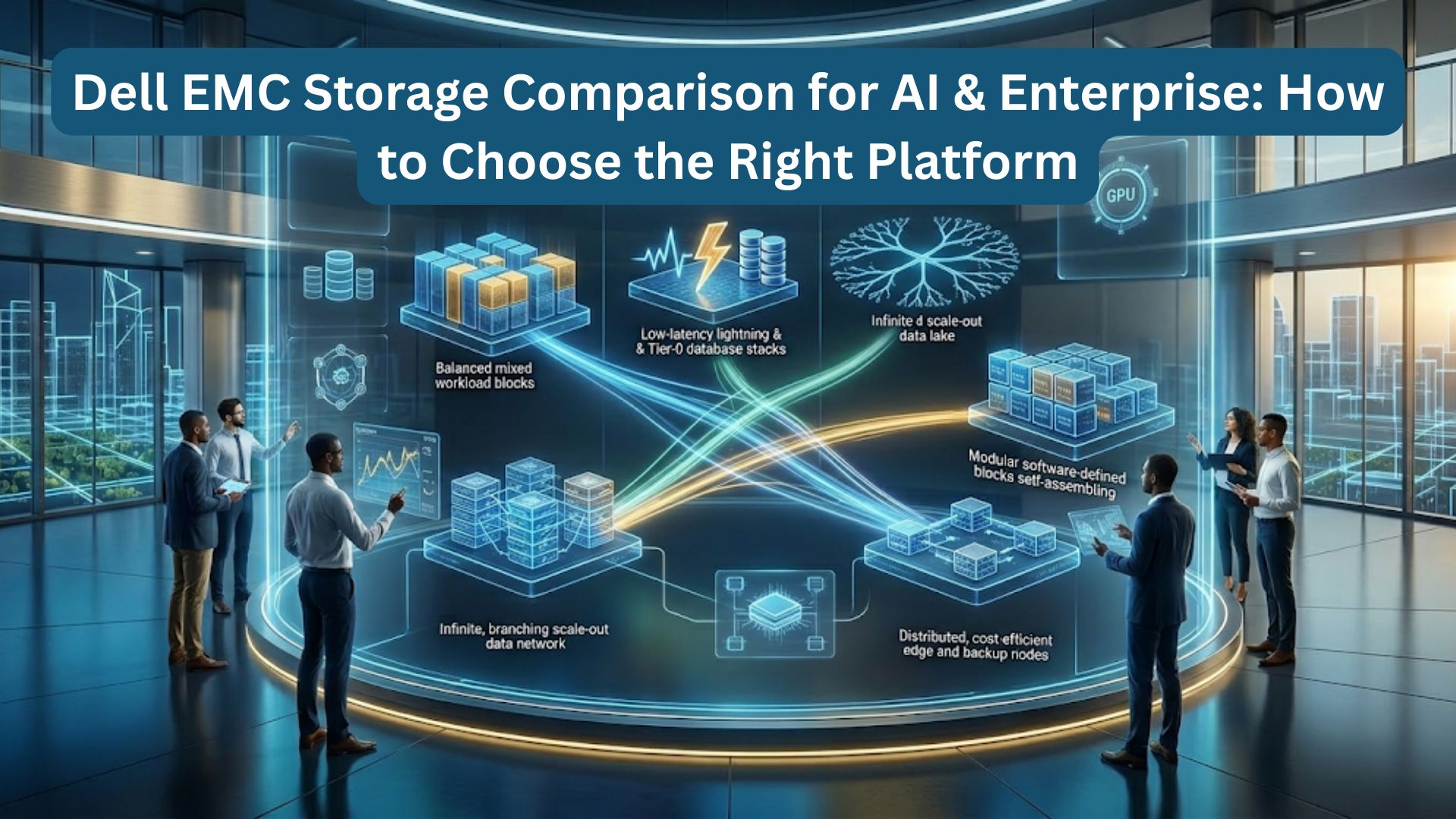
Modern data infrastructure decisions are no longer driven by capacity alone. Performance, scalability, and resilience now determine whether AI pipelines run efficiently or stall under pressure.
Enterprises building for analytics, virtualization, and AI workloads need storage systems that align with how data moves, not just where it sits. Choosing between Dell EMC platforms is ultimately a decision about architecture, performance priorities, and long-term growth.
Key Takeaways
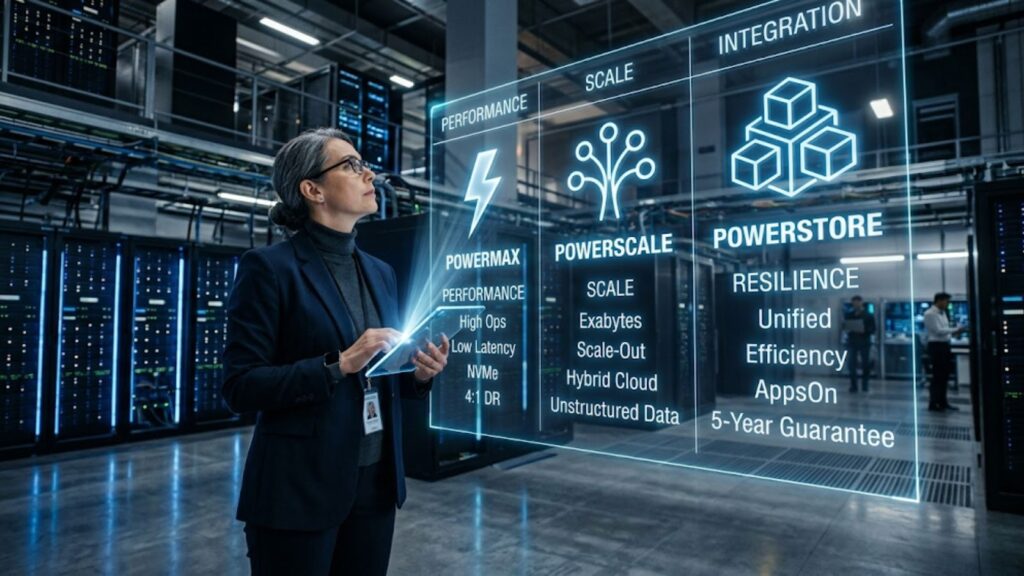
- PowerMax delivers ultra-low latency for mission-critical workloads, while PowerScale enables high-throughput access for AI and unstructured data.
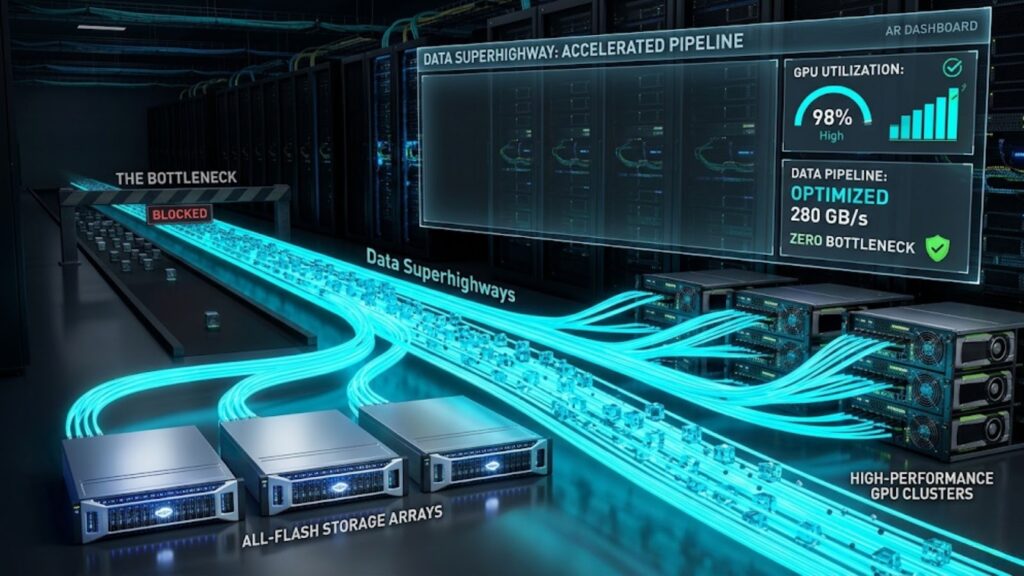
- Storage performance directly impacts AI efficiency by determining how quickly data reaches compute resources and prevents GPU bottlenecks.
- Platform selection depends on workload type, scaling model, and performance requirements rather than capacity alone.
- Modern architectures combine all-flash performance with capacity tiers to balance cost, scalability, and long-term data growth.
Why Dell EMC Storage Matters for Modern Infrastructure
Storage defines how fast applications respond, how reliably systems operate, and how efficiently data flows into compute environments.
In AI and HPC environments, storage performance directly impacts GPU utilization. When data delivery slows, compute resources remain underutilized, increasing costs without improving output.
Organizations evaluating enterprise storage systems typically focus on:
- Latency consistency for critical workloads
- Throughput for large-scale data processing
- Scalability for growing datasets
- Resilience for business continuity
A broader architectural perspective is outlined in this enterprise storage strategy, where storage is positioned as a core layer of modern infrastructure design.
Dell EMC Storage Platforms Explained
Each Dell EMC platform is designed for a specific workload profile. Selecting the right one depends on how data is accessed, processed, and scaled.
PowerStore — Balanced Performance for Mixed Workloads
PowerStore is designed for environments that require flexibility across multiple workloads.
Typical use cases include:
- Virtualization platforms
- Enterprise applications
- Mixed SAN environments
It provides a balance between performance and scalability, making it suitable for organizations modernizing existing infrastructure.
PowerMax — Mission-Critical Performance at Scale
PowerMax is engineered for environments where latency and uptime are non-negotiable.
It is commonly deployed for:
- Tier-0 databases
- Core transactional systems
- High-availability enterprise platforms
Organizations running financial systems or large-scale ERP workloads often prioritize PowerMax due to its consistent performance under load.
PowerScale — Scale-Out Storage for Unstructured Data
PowerScale supports environments where data grows rapidly and requires parallel access.
It is widely used for:
- AI datasets
- Data lakes
- Media and research workloads
In AI pipelines, storage must feed compute nodes continuously. This requirement is closely aligned with architectures discussed in AI infrastructure planning, where throughput and parallel access are critical.
PowerFlex — Software-Defined Infrastructure Flexibility
PowerFlex enables organizations to build software-defined environments with flexible scaling.
It is typically used by:
- Platform engineering teams
- Private cloud environments
- Automation-driven infrastructures
This approach aligns with modern deployment models where compute and storage scale independently, similar to patterns outlined in hybrid infrastructure design.
PowerVault — Cost-Efficient Storage for Edge and Backup
PowerVault is designed for environments where simplicity and cost efficiency are priorities.
Common use cases include:
- Edge locations
- Backup storage
- Capacity tiers
It is often deployed in distributed environments where centralized high-performance storage is not required.
How Do You Compare Enterprise Storage Platforms?
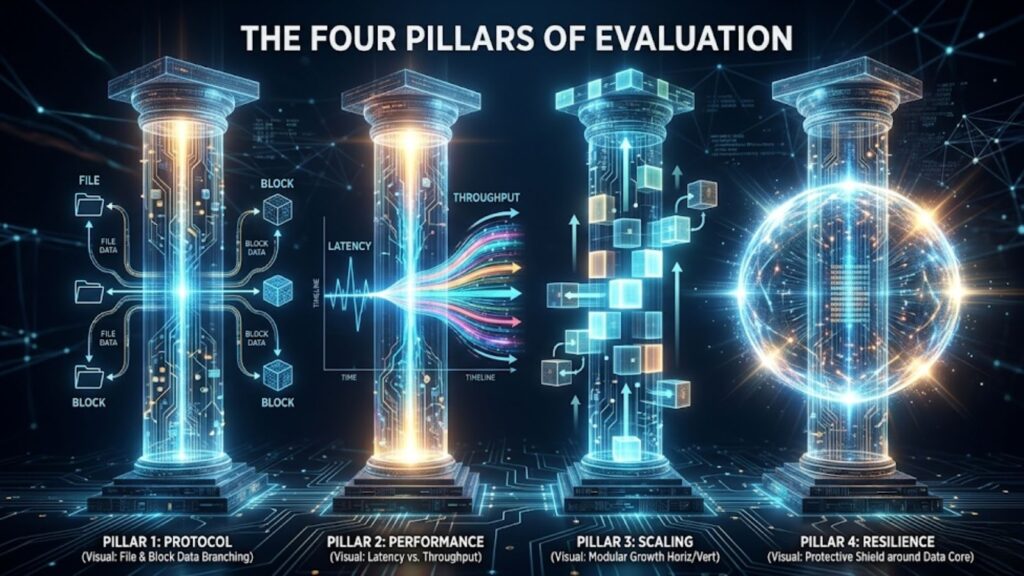
Selecting the right platform requires evaluating four key dimensions:
1. Protocol Type
2. Performance Profile
- Low latency for transactional systems
- High throughput for analytics and AI
3. Scaling Model
- Scale-up for predictable growth
- Scale-out for rapid data expansion
4. Resilience Strategy
- Data protection mechanisms
- Recovery objectives (RPO/RTO)
How to compare high-performance storage arrays for data centers?
| Platform | Strength | Best Workloads | Ideal Environment |
| PowerStore | Balanced performance | Virtualization, mixed workloads | Mid to large enterprises |
| PowerMax | Ultra-low latency | Tier-0 databases, transactional apps | Large enterprises |
| PowerScale | High-throughput scale-out | AI datasets, analytics, file workloads | Enterprise to hyperscale |
| PowerFlex | Software-defined flexibility | Cloud-like platforms, automation | Platform engineering teams |
| PowerVault | Cost-efficient simplicity | Backup, edge, capacity storage | SMB and distributed sites |
What Are the Advantages of All-Flash Storage?
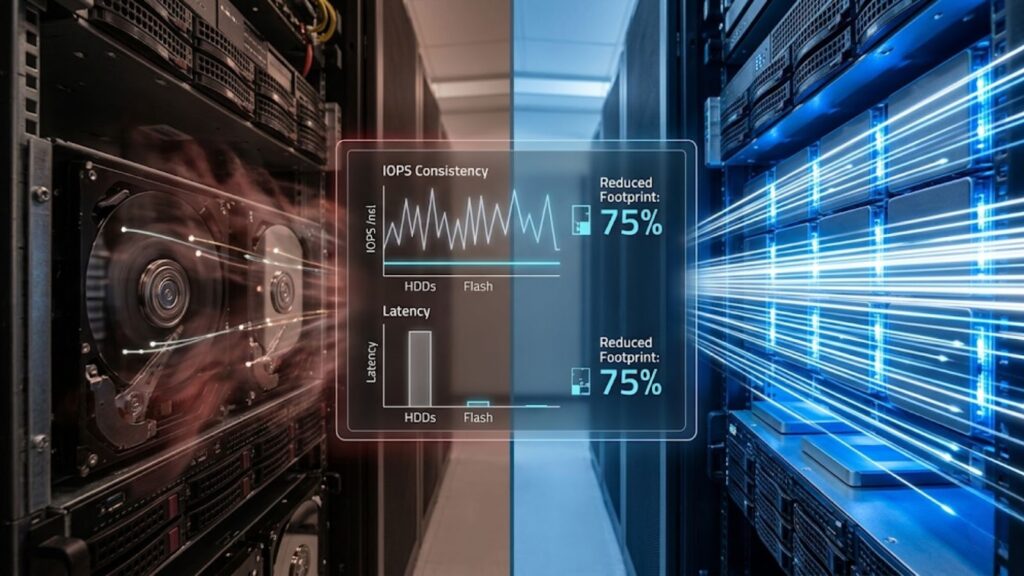
All-flash arrays are widely adopted because they improve performance consistency across workloads.
Key benefits include:
- Reduced latency for critical applications
- Stable performance during peak demand
- Compact infrastructure footprint
- Improved application responsiveness
Many organizations implement tiered architectures, combining flash storage with capacity tiers. This balance is often considered alongside infrastructure decisions such as cloud vs hybrid cost models.
Which Dell EMC Platform Fits Your Industry?
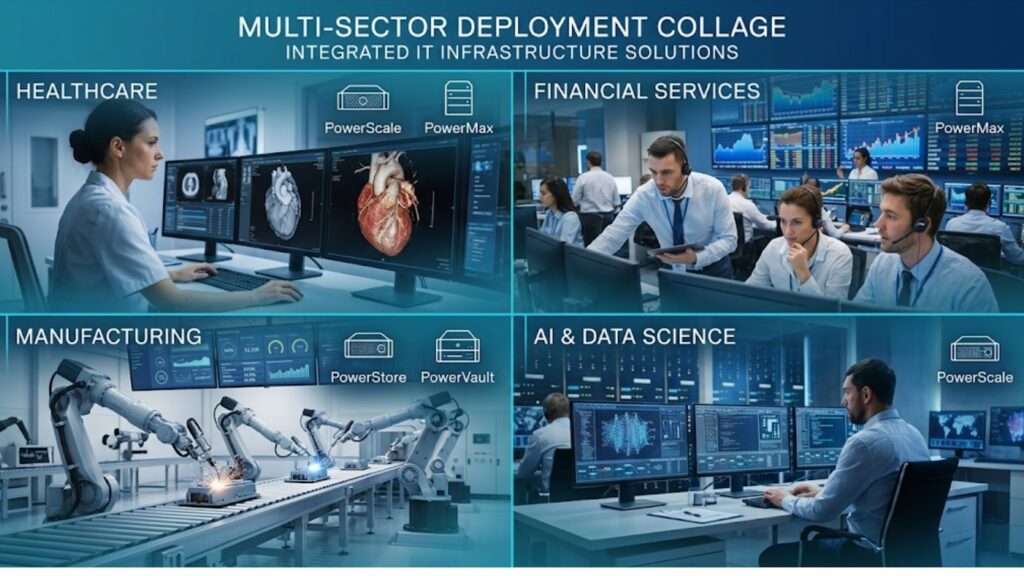
Different industries prioritize different storage characteristics. The right platform depends on what fails first when performance drops.
Healthcare
- PowerMax for clinical systems requiring uptime
- PowerScale for imaging and large datasets
Financial Services
- PowerMax for transaction-heavy systems
- PowerStore for enterprise virtualization
Manufacturing
- PowerStore for ERP workloads
- PowerVault for edge environments
- PowerScale for telemetry and retention
AI and Data Science
- PowerScale for data lakes and pipelines
- PowerStore or PowerMax for databases and metadata
AI infrastructure planning often extends beyond storage into compute design, as seen in GPU server architecture planning, where data flow efficiency becomes critical.
What Matters Most for AI and HPC Storage?
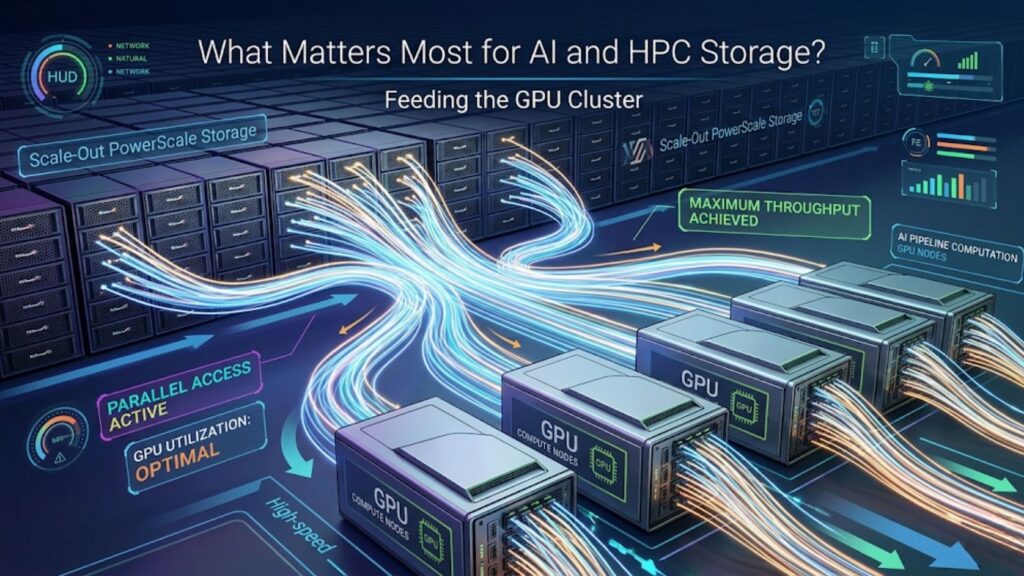
AI workloads depend on how efficiently data reaches compute resources.
The most critical factors include:
- Throughput to feed GPUs continuously
- Latency consistency for system stability
- Parallel access across multiple nodes
- Scalable architecture for dataset growth
Without these elements, even high-performance compute systems cannot operate efficiently.
Procurement and Supply Chain Considerations

Storage decisions are not purely technical. Procurement timelines and component availability can impact deployment schedules.
Key considerations:
- Define bill of materials early
- Approve alternative components
- Phase deployment based on priorities
Organizations planning long-term infrastructure often align procurement with broader storage strategies available in enterprise storage solutions.
How to Choose the Right Dell EMC Storage Platform
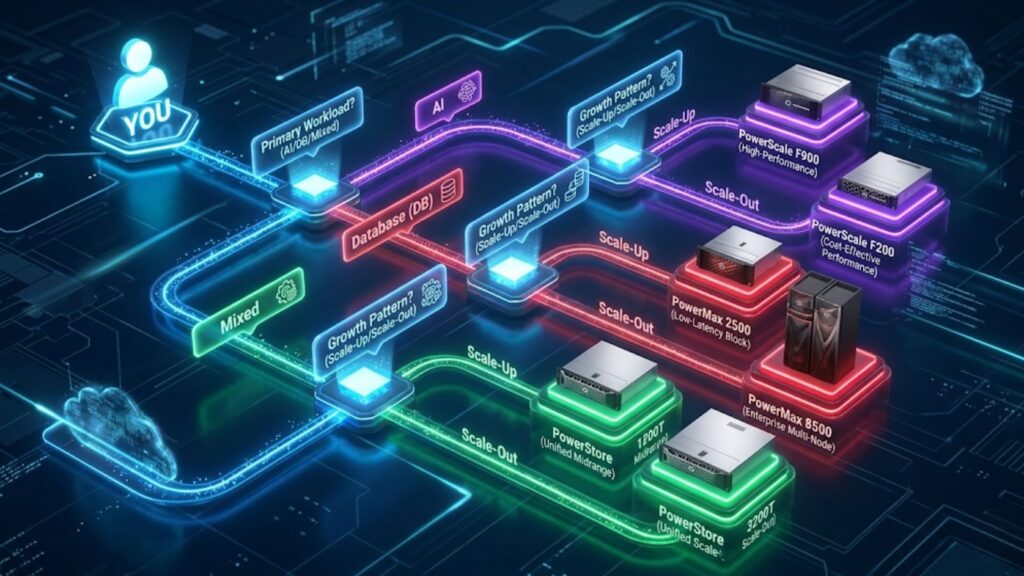
A structured decision process improves long-term outcomes.
Step-by-Step Approach
- Identify primary workloads
- Define performance requirements
- Evaluate growth patterns
- Align with infrastructure strategy
- Validate procurement constraints
This approach ensures storage decisions support both current workloads and future expansion.
Build the Right Storage Architecture for Your Enterprise
Choosing the right storage platform requires balancing performance, scalability, and long-term infrastructure goals. Many organizations rely on Catalyst Data Solutions Inc as an enterprise infrastructure partner to align storage decisions with AI, analytics, and enterprise workload demands.
If you’re planning to deploy or optimize your storage environment, expert guidance can help you avoid costly misalignment and ensure your architecture supports future growth.
Frequently Asked Questions
What is Dell EMC storage used for?
Dell EMC storage platforms support enterprise workloads including virtualization, databases, AI pipelines, and large-scale data management.
Which Dell EMC platform is best for AI workloads?
PowerScale is commonly used for AI datasets due to its scale-out architecture and high throughput capabilities.
Is all-flash storage necessary for enterprise environments?
All-flash storage improves performance, but many organizations use hybrid models to balance cost and efficiency.
How do you choose between PowerStore and PowerMax?
PowerStore is suited for mixed workloads, while PowerMax is designed for mission-critical applications requiring consistent low latency.
What factors matter most in enterprise storage decisions?
Performance, scalability, resilience, and alignment with overall infrastructure strategy are the primary factors.